Are you dreaming of a lush, productive fruit garden right in your backyard, terrace, or balcony? You are not alone. The trend of home fruit gardening in Pakistan is growing faster than ever. Whether you live in the scorching heat of Multan, the mild climate of Islamabad, or the humid lanes of Karachi, Pakistan’s diverse climate zones make it one of the best countries in South Asia for growing a wide variety of fruits.
Pakistan is already blessed with a rich horticultural heritage. From the legendary Chaunsa mangoes of Multan to the crisp apples of Swat, the country grows fruits that are exported across the globe. But you don’t need a farm to enjoy fresh, organic, homegrown fruit. With the right knowledge, even a small space — a pot on your rooftop or a corner of your lawn — can become a productive mini-orchard.
In this detailed guide, we will walk you through the 20 best types of fruit plants in Pakistan, covering everything from growing tips and ideal climate zones to watering needs, time to fruit, and care advice. Whether you are a beginner or an experienced gardener, this guide is your go-to resource for growing the best fruit plants across Pakistan.
Why Grow Fruit Plants at Home in Pakistan?
Before we dive into the list, let’s understand why more Pakistanis are turning to home fruit gardening:
-
- Rising food prices — Growing your own fruit saves money in the long run.
-
- Organic and chemical-free produce — You control what goes into the soil.
-
- Fresh taste — Homegrown fruit is incomparably fresher than market fruit.
-
- Mental wellness — Gardening reduces stress and improves mood.
-
- Environmental benefit — Fruit trees improve air quality and reduce urban heat.
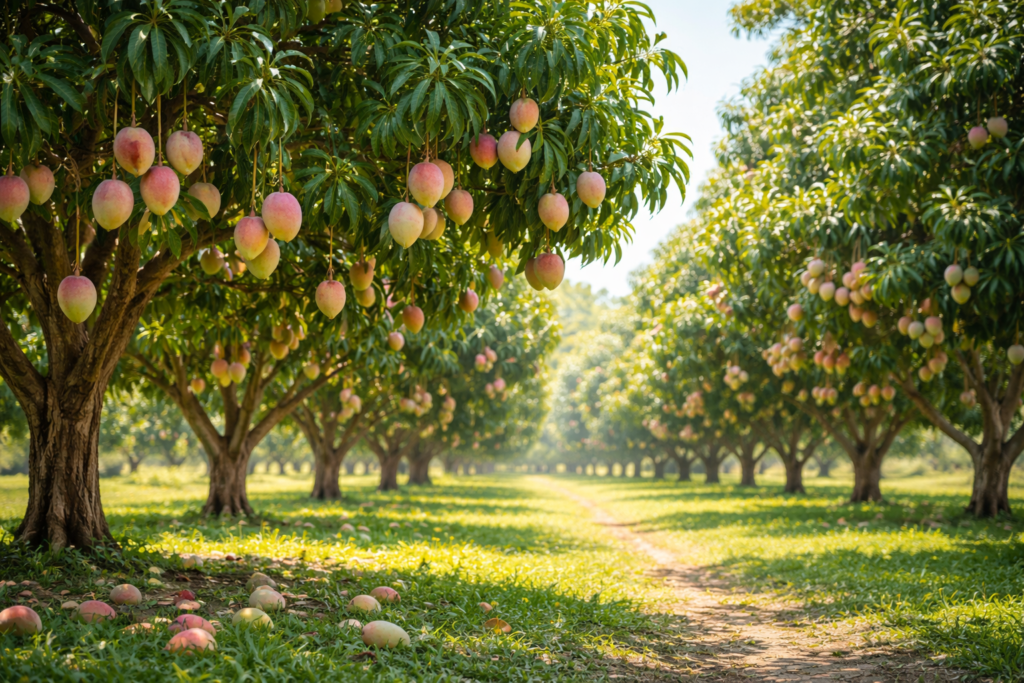
Now, let’s explore the 20 best types of fruit plants you can grow in Pakistan.
1. Mango (Aam) — Mangifera indica
Best regions: Punjab, Sindh, KPK lowlands
Time to fruit: 3–5 years (grafted varieties: 1–2 years)
Known as the King of Fruits, mango is Pakistan’s most iconic fruit. Varieties like Chaunsa, Sindhri, Langra, Anwar Ratol, and Fajri are world-famous. Grafted dwarf mango varieties such as Amrapali can even be grown in large 24–30-inch pots.
Growing Tips:
-
- Plant in full sun with deep, well-drained soil.
-
- Water deeply but allow the soil to dry between watering sessions.
-
- Use a phosphorus-rich fertilizer during flowering.
-
- Protect young trees from frost in northern regions.
2. Guava (Amrood) — Psidium guajava
Best regions: Punjab, Sindh, Balochistan
Time to fruit: 2–4 years (grafted: within 1 year)
Guava is arguably the most beginner-friendly fruit plant in Pakistan. It is hardy, drought-tolerant, and produces sweet, fragrant fruit from October to February. Varieties like Surahi and Gola are widely loved.
Growing Tips:
-
- Grows well in pots and open ground.
-
- Needs 6–8 hours of sunlight daily.
-
- Prune after each harvest to boost next season’s yield.
-
- Minimal fertilizer needed — compost works great.
3. Citrus — Orange, Kinnow & Lemon — Citrus spp.
Best regions: Punjab (Sargodha belt), Sindh
Time to fruit: 2–3 years (grafted)
Pakistan is one of the world’s top producers of Kinnow — a mandarin-orange hybrid. Lemon, orange, and grapefruit are also extremely popular for home gardens. These citrus plants are excellent for growing in pots on balconies and terraces.
Growing Tips:
-
- Require slightly acidic, well-drained soil.
-
- Feed regularly with a citrus-specific fertilizer.
-
- Water deeply, but avoid waterlogging.
-
- Use neem oil to control common pests like aphids and citrus mites.
4. Pomegranate (Anar) — Punica granatum
Best regions: Balochistan, KPK, Punjab
Time to fruit: 2–3 years
Pakistan’s Kandahari pomegranate from Balochistan is famous worldwide. Pomegranate is one of the most drought-tolerant fruit plants suitable for Pakistan’s dry regions. It thrives in containers and open gardens alike.
Growing Tips:
-
- Plant in full sun — it loves heat.
-
- Water deeply but infrequently; allows soil to dry between sessions.
-
- Prune in late winter to shape and promote new growth.
-
- Excellent choice for rooftops and terraces in Karachi, Quetta, and Multan.
5. Fig (Anjeer) — Ficus carica
Best regions: All of Pakistan
Time to fruit: 1–2 years
Fig is one of the fastest-fruiting trees you can grow in Pakistan. It requires very little attention once established and is perfect for dry climates. The fruit is rich in fiber, calcium, and natural sugars.
Growing Tips:
-
- Grows well in containers (18–24 inches deep).
-
- Needs full sun (6+ hours daily).
-
- Water deeply but infrequently — fig trees dislike soggy roots.
-
- Prune after each harvest cycle to control size and encourage fruiting.
6. Banana (Kela) — Musa spp.
Best regions: Sindh, Southern Punjab
Time to fruit: 9–12 months
Banana is a fast-growing, high-yielding fruit plant perfect for the hot and humid climate of southern Pakistan. Dwarf Cavendish varieties (4–6 feet tall) grow beautifully in large containers and add a lush, tropical feel to any garden.
Growing Tips:
-
- Keep in full sun or partial shade.
-
- Water frequently — bananas love moist soil (but not waterlogged).
-
- Use a potassium-rich fertilizer during flowering and fruiting.
-
- Protect from strong winds as leaves tear easily.
7. Papaya (Papita) — Carica papaya
Best regions: Sindh, Punjab, Balochistan
Time to fruit: 6–12 months
Papaya is one of the quickest fruiting plants you can grow in Pakistan. It starts producing fruit in as little as 6 months and continues year-round in warmer climates. The fruit is rich in vitamins A and C and digestive enzymes.
Growing Tips:
-
- Plant in a sunny, sheltered spot.
-
- Needs rich, well-drained soil with plenty of organic matter.
-
- Water regularly, but avoid standing water around roots.
-
- Protect from cold — papaya is frost-sensitive.
8. Grapes (Angoor) — Vitis vinifera
Best regions: Balochistan (Quetta), KPK (Peshawar), Punjab
Time to fruit: 2–3 years
Pakistan’s Balochistan province produces some of the finest grapes in Asia. Grapevines grow beautifully in large pots with a trellis for support. Both green and black grape varieties can be cultivated at home.
Growing Tips:
-
- Requires full sun and warm temperatures.
-
- Train vines on a trellis or fence for best results.
-
- Prune heavily in winter (January–February) to maximize summer fruit yield.
-
- Well-drained sandy loam soil is ideal.
9. Peach (Aaru) — Prunus persica
Best regions: KPK, Balochistan, Murree (Punjab hills)
Time to fruit: 2–4 years
SEO keywords: peach plant growing in Pakistan, aaru ka darakht KPK, stone fruit Pakistan home garden
Pakistan’s northern highlands — especially Swat, Dir, and Balochistan — are famous for juicy, aromatic peaches. Dwarf peach varieties can also be grown in pots in cooler parts of Punjab and Islamabad.
Growing Tips:
-
- Requires winter chilling hours (below 7°C) for good fruit set.
-
- Plant in well-drained, slightly acidic soil.
-
- Apply dormant oil spray in winter to prevent pest buildup.
-
- Thin fruits early in the season for larger, better-quality fruit.
10. Plum (Alucha) — Prunus domestica
Best regions: KPK, Gilgit-Baltistan, Balochistan
Time to fruit: 3–5 years
Plums are a popular fruit in northern Pakistan and are available in red, yellow, and purple varieties. They are moderately easy to grow in cooler areas and are rich in antioxidants and vitamins C and K.
Growing Tips:
-
- Needs winter chilling like peaches.
-
- Full sun with good airflow to prevent fungal diseases.
-
- Mulch around the base to retain moisture.
-
- Cross-pollination with another plum variety increases yield.
11. Jamun (Indian Blackberry) — Syzygium cumini
Best regions: Punjab, Sindh, KPK
Time to fruit: 4–6 years (dwarf varieties: 2–3 years)
Jamun is a beloved summer fruit across Pakistan with deep purple berries that are refreshingly tangy. It is highly valued in traditional medicine for its blood sugar-regulating properties. Dwarf varieties can be grown in large containers.
Growing Tips:
-
- Grows best in deep, loamy soil.
-
- Full sun preferred; drought-tolerant once established.
-
- Water young plants regularly; mature trees need minimal care.
-
- Avoid transplanting mature trees — plant in a permanent location.
12. Ber / Jujube (Bair) — Ziziphus mauritiana
Best regions: All of Pakistan (very adaptable)
Time to fruit: 1–2 years (grafted)
Ber is one of the most resilient and fastest-fruiting trees in Pakistan. It tolerates extreme heat, drought, and poor soils. Improved varieties like Gola, Umran, and Thornless Ber produce large, sweet fruit and are excellent for kitchen gardens.
Growing Tips:
-
- Extremely low maintenance — ideal for busy gardeners.
-
- Prune after harvest to encourage new growth.
-
- Very few pest or disease problems.
-
- Grows in sandy, clayey, or loamy soil with equal ease.
13. Mulberry (Toot) — Morus alba / Morus nigra
Best regions: Punjab, KPK, Gilgit-Baltistan
Time to fruit: 1–2 years (white mulberry), 3 years (black mulberry)
White mulberry (Toot) is one of the most common trees lining streets and homes across Pakistan. Black mulberry produces richer, juicier berries. Both are fast growers and excellent shade trees that also produce edible fruit.
Growing Tips:
-
- Extremely fast grower — can fruit within 1–2 years.
-
- Tolerates a wide range of soils; prefers well-drained ground.
-
- Minimal care is required once established.
-
- Harvest by spreading a cloth below the tree and shaking the branches.
14. Date Palm (Khajoor) — Phoenix dactylifera
Best regions: Sindh, Balochistan, Southern Punjab
Time to fruit: 4–7 years
Khajoor holds deep cultural and religious significance in Pakistan. Pakistan is one of the world’s leading producers of dates, with Sindh and Balochistan accounting for the majority of production. The Aseel variety from Khairpur is world-famous for its golden sweetness.
Growing Tips:
-
- Loves intense heat and full sun.
-
- Very drought-tolerant once established.
-
- Male and female trees are needed for fruit; one male per 8–10 females.
-
- Hand-pollination increases yield significantly.
15. Loquat (Looqat) — Eriobotrya japonica
Best regions: Punjab hills, Islamabad, KPK
Time to fruit: 3–5 years
Loquat is a beautiful evergreen tree that produces fruit from February to April — one of the earliest fruiting trees of the season. It is perfect for home gardens in cooler parts of Pakistan, such as Islamabad, Abbottabad, and Murree.
Growing Tips:
-
- Tolerates partial shade but fruits best in full sun.
-
- Needs well-drained, moderately fertile soil.
-
- Protect from extreme frost in the first 2 years.
-
- Thin fruit clusters for larger individual fruits.
16. Strawberry (Strawberry) — Fragaria × ananassa
Best regions: Islamabad, Lahore (winter), Murree, Abbottabad
Time to fruit: 3–6 months
Strawberries are a hugely popular choice for container gardening in Pakistan, especially during the winter months in cooler cities. They grow beautifully in hanging baskets, shallow pots, and railing planters.
Growing Tips:
-
- Grow during October–March in Lahore and Islamabad.
-
- Use rich, well-drained soil in shallow pots or hanging baskets.
-
- Water evenly and consistently.
-
- Mulch around plants to retain moisture and prevent fruit rot.
-
- Feed with a balanced liquid fertilizer every two weeks during fruiting.
17. Coconut (Nariyal) — Cocos nucifera
Best regions: Karachi, Coastal Sindh
Time to fruit: 5–7 years
SEO keywords: coconut tree growing Karachi Pakistan, nariyal ka darakht
Coconut trees are a stunning addition to tropical-climate gardens in Karachi and coastal Sindh. While they take years to fruit, they add tremendous aesthetic value, provide cooling shade, and yield nutritious coconut water and flesh.
Growing Tips:
-
- Requires heat, humidity, and full sun.
-
- Plant in sandy, well-drained soil with good drainage.
-
- Water deeply and regularly in dry periods.
-
- Tolerates mild salinity — great for coastal areas.
18. Chikoo (Sapodilla) — Manilkara zapota
Best regions: Sindh, Southern Punjab
Time to fruit: 5–8 years (grafted: 2–3 years)
Chikoo is a slow-growing but highly rewarding tropical fruit tree. The brown, sweet, grainy fruit is extremely popular in Karachi and across Sindh. Grafted varieties bear fruit much sooner and are ideal for home gardens.
Growing Tips:
-
- Thrives in hot, humid tropical climates.
-
- Needs deep, well-drained soil with regular organic matter application.
-
- Drought-tolerant once established.
-
- Protect young plants from cool winters.
19. Apricot (Khubani) — Prunus armeniaca
Best regions: Gilgit-Baltistan, Balochistan, KPK
Time to fruit: 3–5 years
Gilgit-Baltistan is home to some of the world’s finest apricots, and dried apricots (Sookhay Khubani) from the region are an important export product. Apricot trees are well-suited for high-altitude, cooler regions of Pakistan.
Growing Tips:
-
- Requires a long, cold winter for good dormancy and fruiting.
-
- Plant in a south-facing slope to maximize sun exposure.
-
- Prune in winter to maintain an open canopy.
-
- Use copper-based fungicide sprays to prevent bacterial canker.
20. Amla (Indian Gooseberry) — Phyllanthus emblica
Best regions: Punjab, Sindh, KPK
Time to fruit: 4–5 years (grafted: 2–3 years)
Amla is a nutritional powerhouse and one of the most underrated fruit plants in Pakistan. A single amla fruit contains 20x more Vitamin C than an orange. It is used in pickles (murrabba), juices, herbal medicine, and hair care products.
Growing Tips:
-
- Grows well in tropical and subtropical climates across Pakistan.
-
- Drought-tolerant and low-maintenance once established.
-
- Prefers well-drained, loamy soil with slightly acidic pH.
-
- Excellent choice for organic home gardens.
General Tips for Growing Different Types Of Fruit Plants in Pakistan
1. Choose the Right Variety for Your Climate Zone
Pakistan has four major climate zones — arid/semi-arid (Sindh/Punjab plains), subtropical (central Punjab), temperate (Islamabad/KPK), and alpine (Gilgit-Baltistan). Always choose fruit varieties suited to your region’s heat, cold, and rainfall patterns.
2. Use the Right Soil Mix
Most fruit plants thrive in a mix of garden soil, compost, and coarse sand in a 2:1:1 ratio. Good drainage is non-negotiable — waterlogged roots are the #1 killer of home fruit plants in Pakistan.
3. Watering Wisely
Most fruit plants in Pakistan prefer deep, infrequent watering over shallow, frequent watering. This encourages deep root growth and drought resilience. Water early in the morning to reduce evaporation.
4. Feed Regularly
Apply a balanced slow-release fertilizer at the start of spring (February–March) and again in early summer (May–June). Compost and organic matter applications in autumn improve soil health over time.
5. Pest and Disease Management
Use neem oil spray as a first-line defense against common pests like aphids, mealybugs, and whiteflies. For fungal diseases, ensure good airflow through regular pruning and avoid overhead watering.
6. Container Gardening for Small Spaces
If you live in an apartment or have a small terrace, don’t be discouraged. Plants like lemon, guava, fig, pomegranate, dwarf mango, and strawberry grow beautifully in pots. Always use containers with drainage holes and repot every 2–3 years.
Seasonal Fruit Planting Calendar for Pakistan
| Season | Best Time to Plant | Recommended Fruits |
|---|---|---|
| Spring | February – March | Mango, Citrus, Papaya, Banana, Guava |
| Summer | June – July | Jamun, Ber, Mulberry, Chikoo |
| Autumn | September – October | Strawberry, Loquat, Fig, Grape |
| Winter | November – January | Peach, Plum, Apricot (bare-root planting) |
Where to Buy Fruit Plants in Pakistan
You can find quality grafted fruit plants at:
-
- Local nurseries in Pattoki, like Yaseen Nursery, and some online Suppliers like Raoo Plant Suppliers..
-
- Government horticulture departments, particularly for subsidized or disease-free certified saplings
-
- Agriculture universities — UAF (Faisalabad), UVAS (Lahore), and SAU (Tandojam) often sell certified plants
Conclusion
Pakistan’s diverse climate is a gift for gardeners. From the tropical coasts of Karachi to the alpine valleys of Gilgit-Baltistan, there is a fruit plant perfectly suited to every corner of the country. Whether you have a sprawling lawn or a tiny apartment balcony, growing your own fruit is one of the most rewarding hobbies you can pursue.
The 20 best types of fruit plants in Pakistan listed in this guide offer something for every gardener — from fast fruiting plants like papaya and ber, to long-term investments like mango and date palm. Start small, choose the right plants for your climate, and watch your home transform into a productive, beautiful fruit garden.
Happy gardening! 

